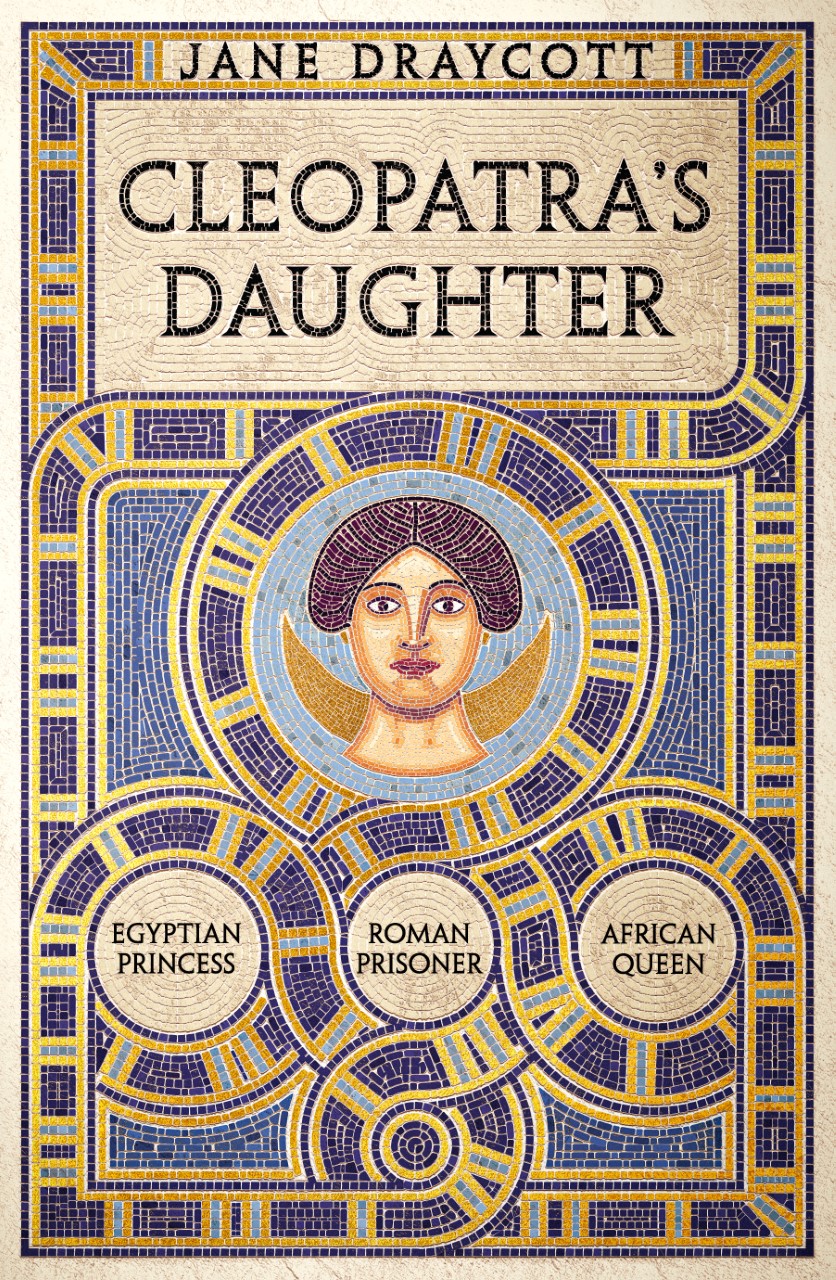
Cleopatra’s Daughter: Egyptian Princess, Roman Prisoner, African Queen (UK, Head of Zeus, 2022)
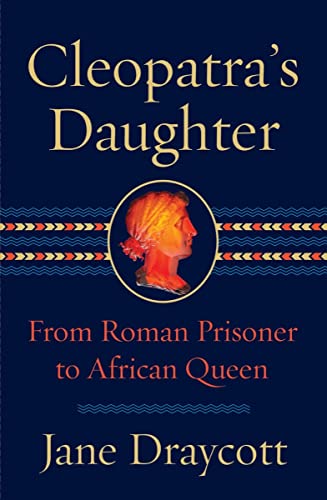
Cleopatra’s Daughter: From Roman Prisoner to African Queen (US, Liveright, 2023)
De Dochter van Cleopatra: Egyptische Prinses, Romeins Gevangene, Afrikaanse Koningin (Netherlands, Omniboek, 2023)
As the only daughter of Roman Triumvir Marc Antony and Egyptian Queen Cleopatra VII, Cleopatra Selene was expected to uphold traditional feminine virtues; to marry well and bear sons; and to legitimize and strengthen her parents’ rule. Yet with their deaths by suicide, the princess and her two brothers—neither of whom lived to adulthood—found themselves the inheritors of Egypt, a claim that placed them squarely in the warpath of the Roman emperor.
“Supported by a feast of visual and literary references” (Caroline Lawrence), Cleopatra’s Daughter reimagines the life of Cleopatra Selene, a woman who, although born into Egyptian royalty and raised in her mother’s court, was cruelly abandoned and held captive by Augustus Caesar. Creating a narrative from frescos and coinage, ivory dolls and bronzes, historian and archaeologist Jane Draycott shows how Cleopatra Selene endured years of imprisonment on Palatine Hill, where Octavia—Augustus’s sister and Antony’s fourth wife—housed other royal children orphaned in the wake of Roman expansion.
Despite her parentage, Cleopatra Selene in time endeared herself to Augustus and Octavia through her remarkable intellect and political acumen. Rather than put her to death, Augustus wed her to the Numidian prince Juba, son of the deposed regent Juba I, and installed them both as client rulers of Mauretania in Africa. There, Cleopatra Selene ruled successfully for nearly twenty years, promoting trade and reclaiming her mother’s legacy—at a time, Draycott reminds us, when kingship was an inherently male activity.
A princess who became a prisoner and a prisoner who became a queen, Cleopatra Selene here “finally attains her rightful place in history” (Barry Strauss), her life shedding new and revelatory light on Egyptian and Roman politics, society, and culture in the early days of the Roman Empire.
Reviews for Cleopatra’s Daughter: Egyptian Princess, Roman Prisoner, African Queen
‘Draycott is skilled at bringing ancient social environments to life. Her reconstructions … are plausible & vivid … With the help of fascinating illustrations, Draycott does an excellent job in recreating the culture and febrile atmosphere of the early years of Augustus’ reign … [Cleopatra Selene’s] complicated ethnic identity – as a member of the Macedonian royal family, born in Egypt, partly raised in Rome & reigning as queen in northwest Africa – can, as Draycott shows, illuminate modern debates on immigration, acculturation & citizenship … Draycott shows a sensitivity … towards by far the most important aspect of the reception of Cleopatra over more than a century: her ethnicity’ – Professor Edith Hall, Times Literary Supplement
‘It is extraordinary that such a story has remained untold for so long. The historian and archaeologist Jane Draycott has masterfully pieced together a rich range of literary and artistic sources to create this immensely readable account of a great queen, who wielded power at a time when women were largely marginalised’ – Pippa Bailey, The New Statesman
‘Draycott provides insight into the Roman Empire and Egyptian life during the time of Cleopatra Selene, giving readers a full picture of what life must have been like for her. It’s well-researched and full of interesting facts and details that history buffs will find satisfying and exciting. And for those readers like myself who have often thought women haven’t received their rightful place in the history books, this one goes quite some way in recognizing that they have long played an interesting and influential role in the past’ – Susan Miller, San Francisco Book Review
‘Cleopatra VII is one of the most famous women in history, but her remarkable daughter Cleopatra Selene II is more obscure. Historian and archaeologist Dr. Jane Draycott sets out to rectify this with a thorough but accessible biography … Being the only work of its kind makes it an easy recommendation, but it is of a quality to stand out anyway … Draycott vividly recreates the environment in which Selene grew up, one surrounded by the war’s aftermath. With how Draycott tells the history, it is impossible not to feel sympathy for her … The breadth of research on display is impressive, bringing to life Cleopatra Selene II’s world with textual and archaeological evidence. The book’s only sin is the common tendency of biographies to humanize their subject. Little of Selene’s personality has filtered down to us through the historical record, so the author must guess at the queen’s inner emotional life. This is as close as we can come to seeing events through Selene’s eyes. To her credit, Draycott is careful to distinguish between fact and supposition’ – Arienne King, World History Encyclopedia
‘An engaging scholarly study of one of the few children of Cleopatra and Antony to thrive after their deaths. In this deep work of historical excavation, Draycott, an archaeologist and professor of ancient history at the University of Glasgow, re-creates with keen contextual evidence the life and turbulent times of Cleopatra’s surviving daughter, Cleopatra Selene … Though Draycott’s subject “will undoubtedly never reach the heights of fame, or infamy,” of her mother, the author presents a useful portrait by which she can “be judged on her own merits as an individual rather than as an idea or an archetype.”’ – Kirkus Reviews
 Dr Jane Draycott